



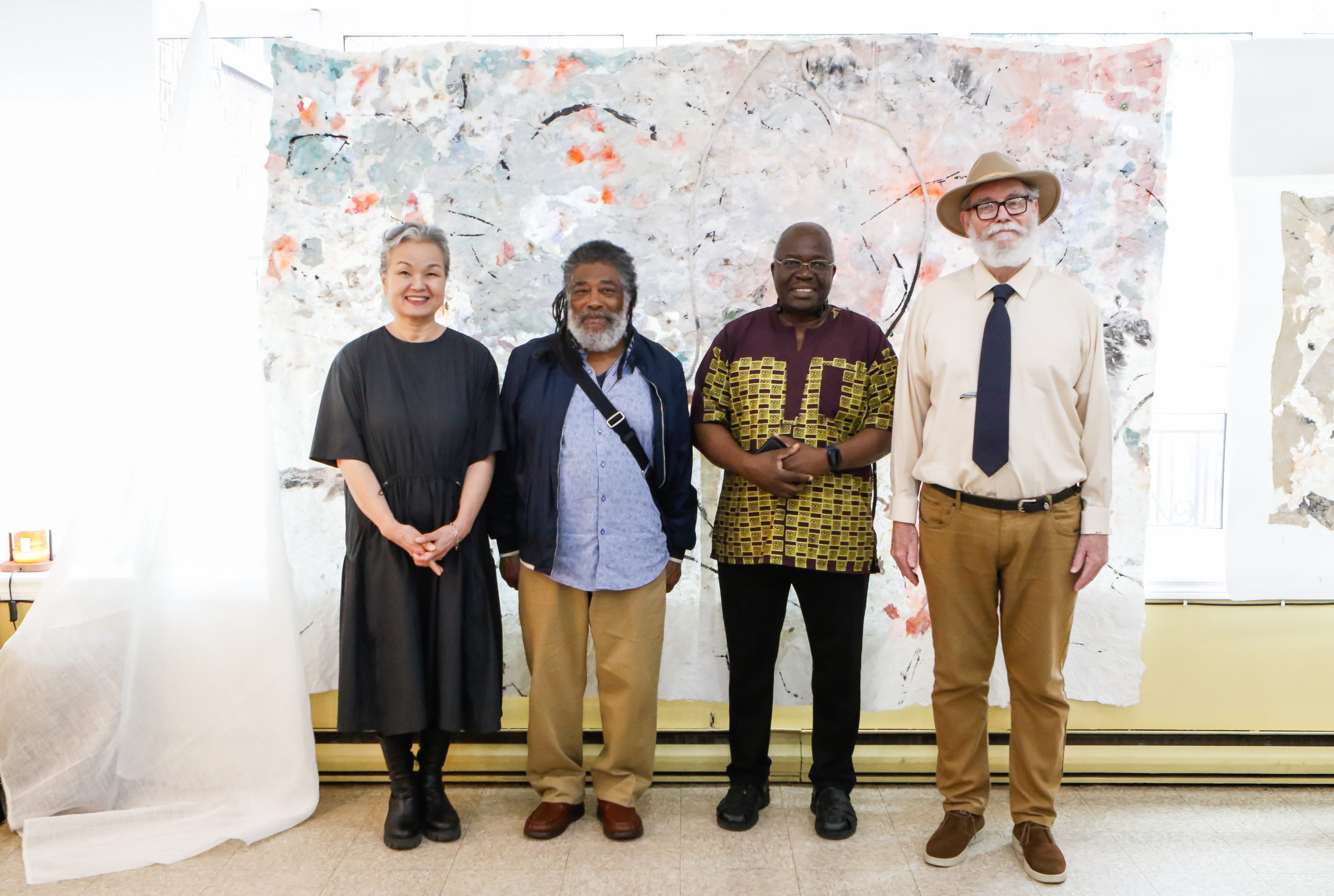
Festival International de Jazz de Montréal (FIJM) is one of the biggest music festivals in the world, with so much music art, souvenirs, and food, that it often spills out beyond the official Festival itself. Here are two events that took place during FIJM that show just how widespread the creative influence reaches during the 10 days of the Festival.
Jjaazexpo2
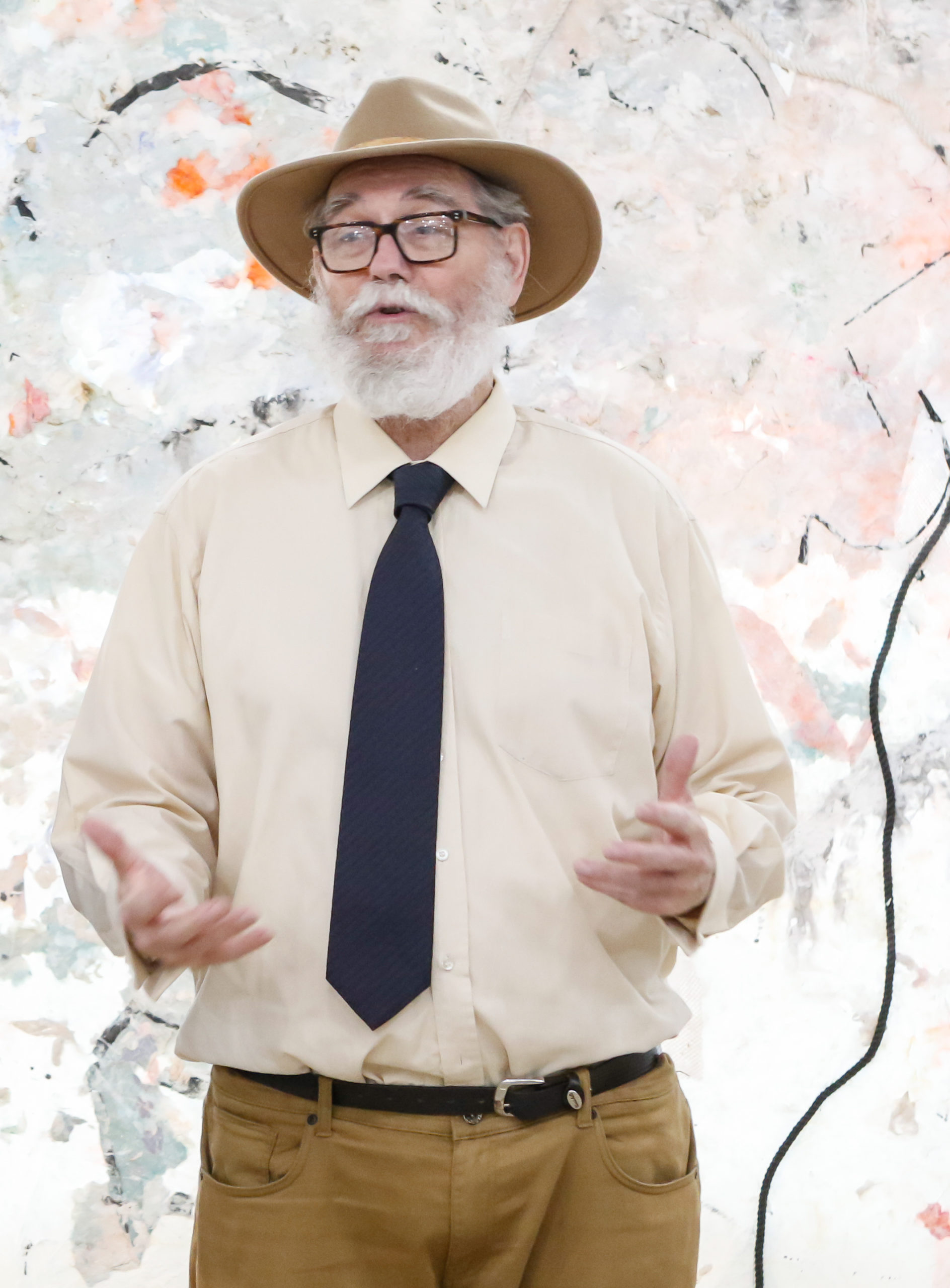
Jjaazexpo2 was curated by noted Canadian Religious Studies scholar Professor Norman Cornett, who is also a music aficionado. He has a long history of hosting visual artists and jazz musicians, as well as several jazz masses. For more information about Professor Cornett, go to www.professornormancornett.com. The event was held at Centre Afrika, a non-profit organization where Father Freddy Kyombo Senga was the Director. Centre Afrika’s mission is to promote harmonious living by forging bonds of friendship and solidarity between Africans and their host communities.
When Light Becomes Colour
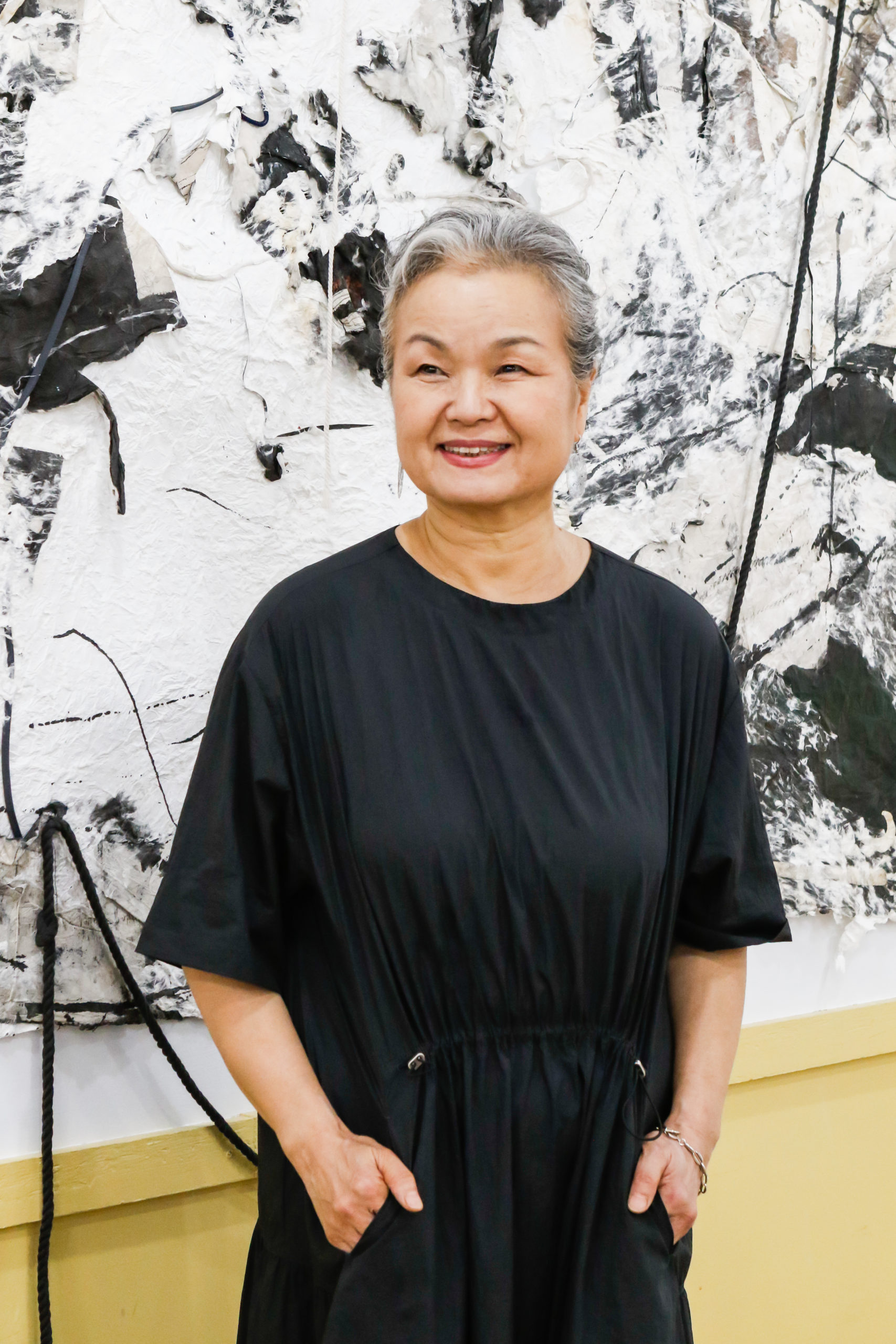
Korean Canadian artist Miae Ham presented an exhibition titled When Light Becomes Colour. Miae is known for her mixed-media work that includes abstracts, florals, and landscapes. Originally from Chuncheon-si, Korea, Ms. Ham has lived in Seoul, Singapore, and Vancouver, and now resides in Montréal. Miae started out doing oil painting on canvas, then became interested in traditional Korean paper art. As part of her process, she often paints on the floor. Ham is a graduate of Seoul National University, with a Master’s degree in Fine Arts.
The talented Ham makes great use of paper that is rolled, and she discussed her brush techniques that have different effects. She often uses both sides of an art piece, with totally different works on each side. She expressed the importance of hiding some aspects of her art within each piece, and she stated that there is deep emotion in the layers of any work.
Miae has a very large family, and once, 40 relatives came to her house! She said it’s a balancing act to combine art and family. Ham spends six months in Canada with her two daughters, who are studying there, and six months in Korea with her husband. It is a disciplined life, and she works tirelessly on her art when she is in Canada. Miae asserted that it is very important to her to connect with people through her art.
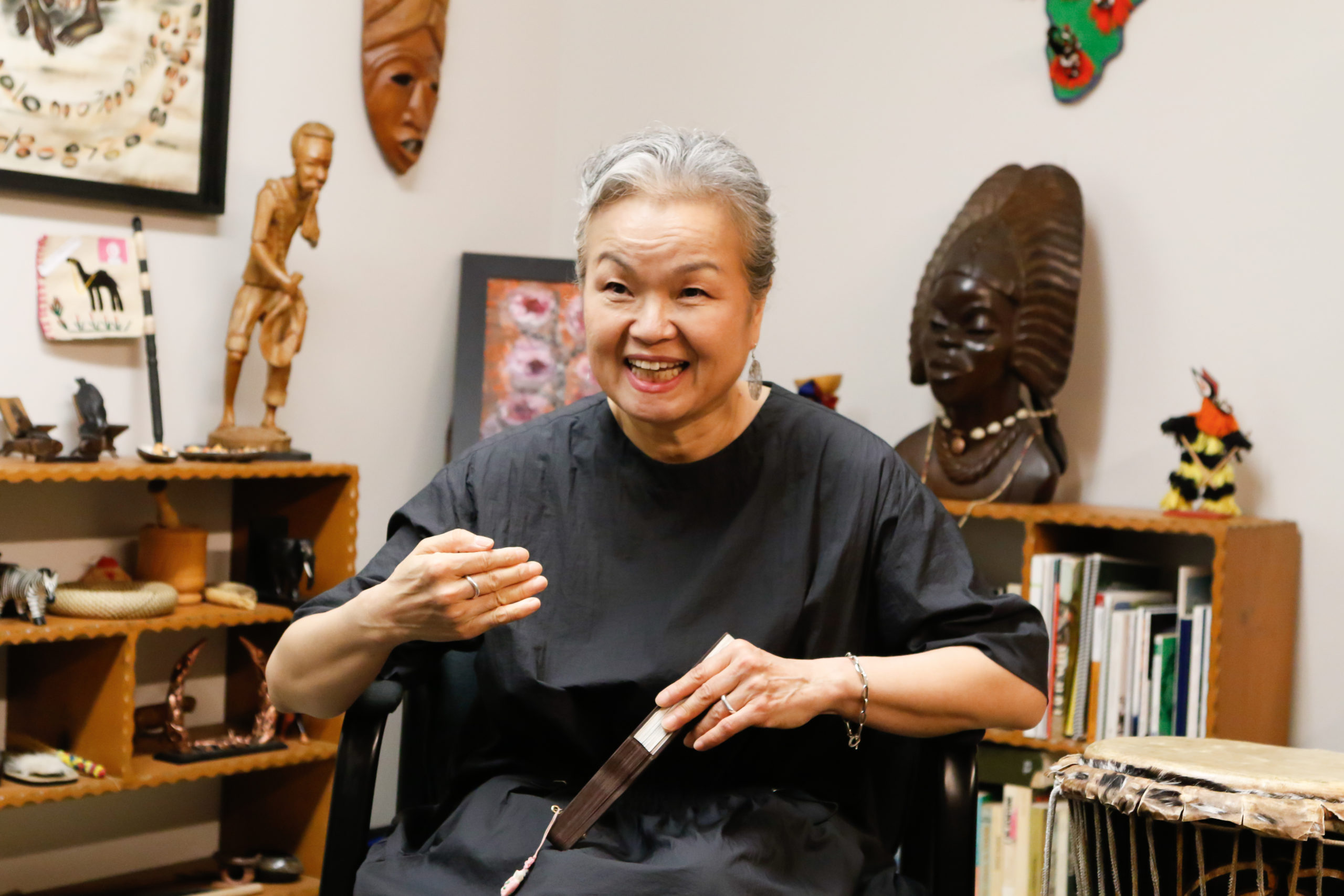
Ham is charmingly animated in person, and very expressive about her work. Her process is a very long one, and she is also writing a book. She is a woman of deep faith, which greatly influences her work. She spoke of the parts of the Bible that mean a lot to her. Miae also mentioned philosophers Immanuel Kant and Georg Wilhelm Friedrich Hegel as having impacts on her life, and Cornett said that it’s unusual for people to quote both philosophers and the Bible. Ham discussed the artist Kandinsky and the German Bauhaus school, and their approaches to abstract art. She also finds great inspiration for her art in music. For more information on Miae Ham, go to: www.miaeham.net.
Wadada Leo Smith
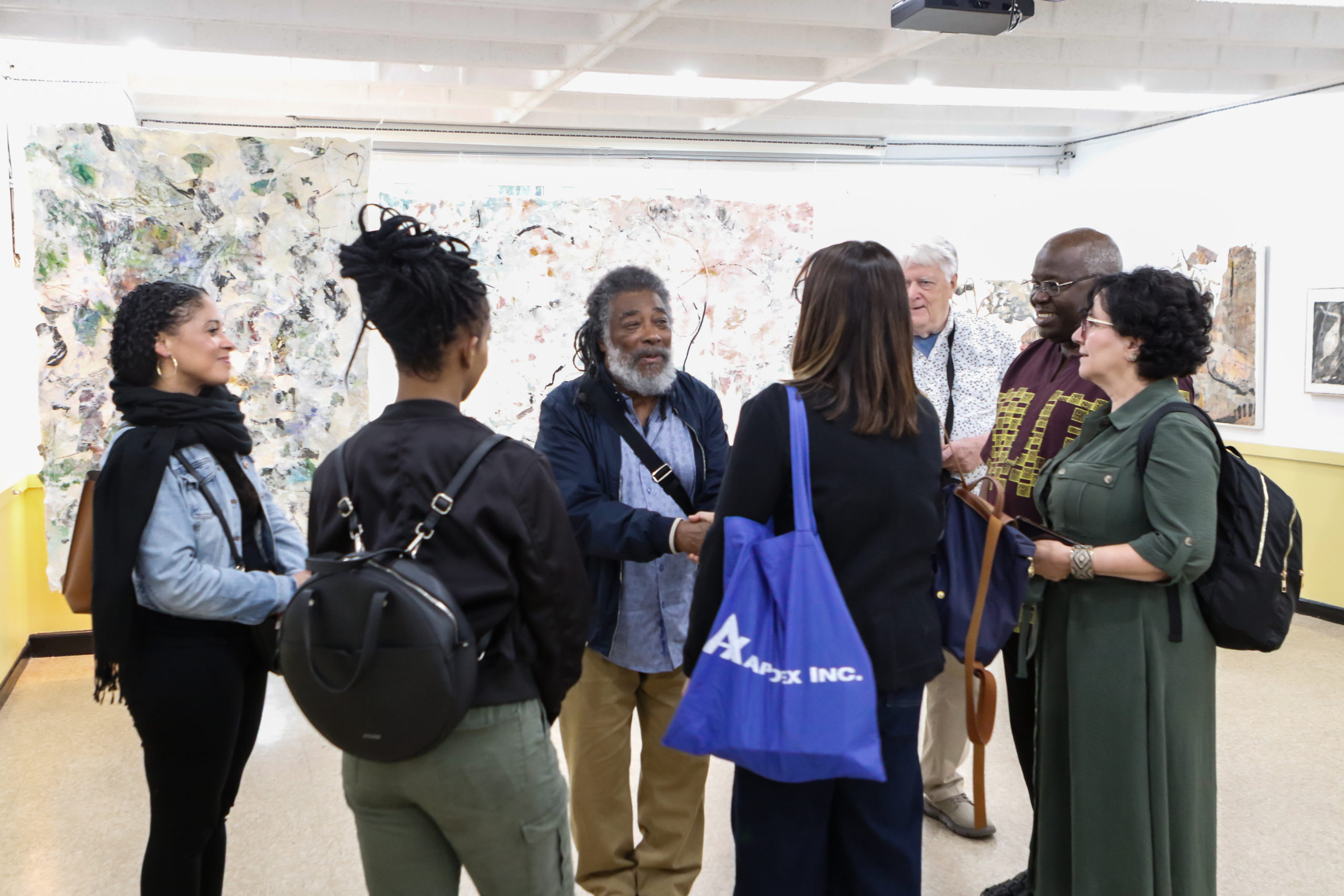
Professor Cornett introduced Wadada Leo Smith, esteemed trumpeter, multi-instrumentalist, composer, and author. Smith was a finalist for the 2013 Pulitzer Prize, was named DownBeat Magazine’s Composer of the Year in 2013, and received a Doris Duke Award in 2016, among many other honors. He has performed with Vijay Iyer, Henry Threadgill, Carla Bley, John Zorn, Don Cherry, Jack DeJohnette, and many more.
Cornett contacted Smith for this event because he realized that Wadada and artist Miae Ham are both grappling with the properties of time and space. Smith is also a visual artist, so Professor Cornett considered having them both at the same event made it an artistic experience made in heaven. Another thing that Ham and Smith have in common is that they are both researchers in their respective fields, so there was synergy in having them together. Professor Cornett called curating the connection between an Asian artist and an African American jazz musician a leap of faith, but it paid off in a big way.
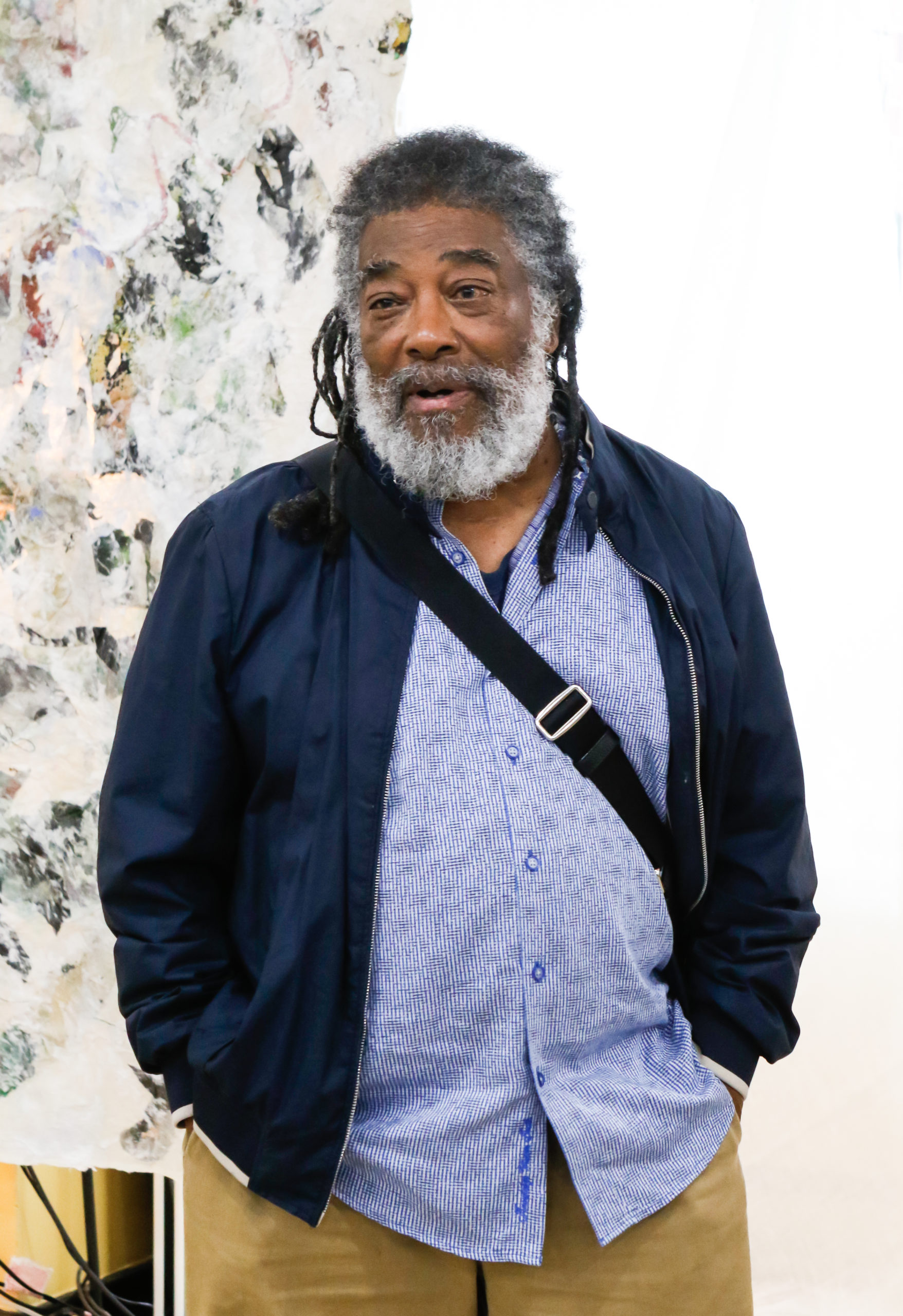
Smith has lived through free jazz, bebob, and hard bop, and he is constantly moving the genre of jazz forward. Cornett said that churning out the same thing kills the creative spirit, and both Miae and Wadada go beyond the expected.
Wadada answered questions from the audience, and he discussed growing up in Mississippi and how his experiences there influenced his music. He spoke about the importance of silences in music. He also talked about the necessity for defiance, and he said that the truest form of defiance is when a person gives their life for a pursuit or cause.
Professor Cornett recalled what he calls a “Dialogic” session that he held with Wadada several years ago, when one of the audience members had trouble expressing himself, and the audience became antsy and impatient. However, Smith showed endless patience with him, something Cornett said he has never forgotten. It demonstrated that Wadada Leo Smith’s heart is as large as his considerable talent. For more information, go to: www.wadadaleosmith.com.
*********************************************************************************************
Je Jazz
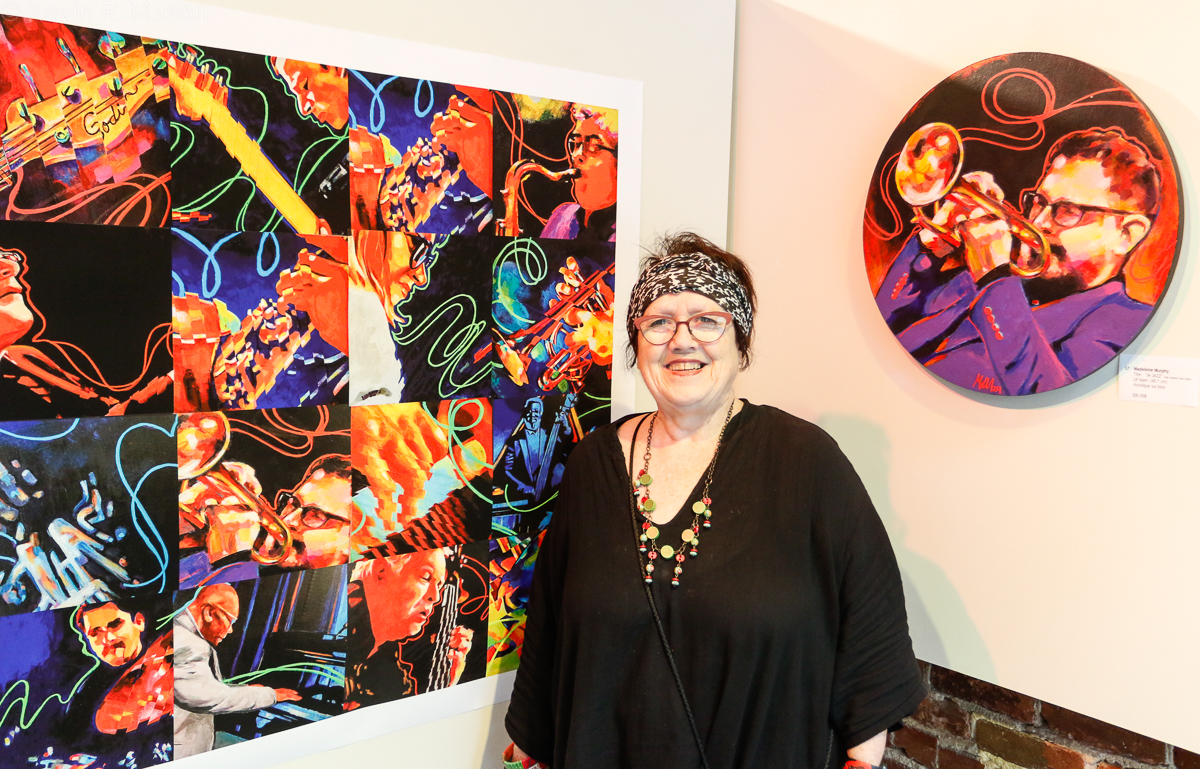
Artist, event planner, and entrepreneur Madeleine Murphy has been part of the creative scene in Montréal for quite a while. “Mado,” as she is known to friends, was born in the Northwest of Quebec province, and she lived there until she was 13 years old. Her father was a mining engineer, in an area with a small population. Then her family moved to Quebec City, where her father became the director of the mining industry in Quebec, and she experienced a very different life in the city. When she was 25, she came to Montréal, which she loved and still loves to this day, and she married her husband, Ken Murphy. Her first job in Montréal was as an illustrator, then later she worked for an advertising agency.
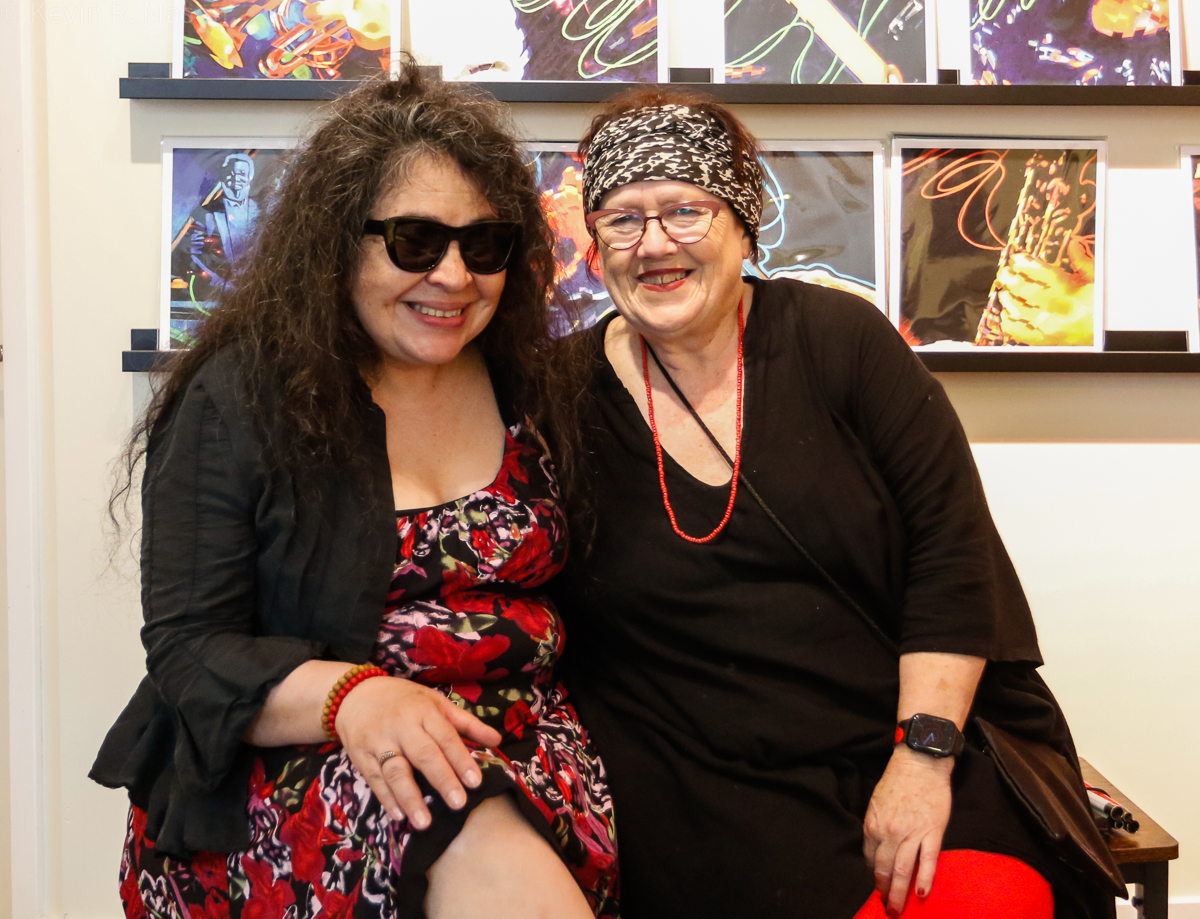
Mado had a gift store for 25 years with her late husband Ken, which sold Japanese artifacts. She said she came up with the idea for the store in a dream where she saw papers in all kinds of colors. Madeleine was once a shy person, but opening her store brought her out of her shell. Rosa Bautista, a good friend of Mado’s, used to go to the store, long before they even met, because she loved the items that were sold there. Later, Madeleine and Rosa became connected through FIJM.
Mado started painting years ago. She went to Laval University School of Design and School of Visual Arts, but she had many other projects along the way. Although she couldn’t devote herself fully to her painting early on, Mado has always been surrounded by art and music. For years, when she lived in a big loft with an event space on the first floor, she hosted a delightful series titled Les vendredis Jazz, which translates into “Jazz Fridays.” These monthly parties featured live jazz and delectable food, and they were quite popular for a long time. Mado also hosted some legendary after-hours parties for many artists who had appeared at FIJM. She was introduced to many of them through her friend Michel Verreault, including the Buena Vista Social Club. She also met a woman at her store, Junko Nakagawa, who said she represented Blue Sky Dance Orchestra, the oldest jazz big band in Japan. Junko said they wanted to appear at FIJM, and the next year they did. So Mado and Ken decided to give them a big party that evening, after their outdoor concert. Murphy is a consummate hostess with a bubbly personality, and she is a wonderfully creative cook who always makes her guests feel completely welcome. She said, “I love my friends, and my friends love me,” and she has a talent for bringing people together.
About four years ago, Mado resumed painting musicians she has known and admired, including Oliver Jones, Oscar Peterson, and Charlie Biddle. This effort is a work in progress, and it will continue indefinitely with more artists added. Madeleine first met acclaimed pianist Oliver Jones through drummer Bernard Primeau, when Jones and Primeau played as a trio with bassist Charlie Biddle. Mado also connected with Oliver Jones through her friend Oliver Esmonde White, the highly respected engineer and inventor who is very important in the piano world and is considered a genius at his work.
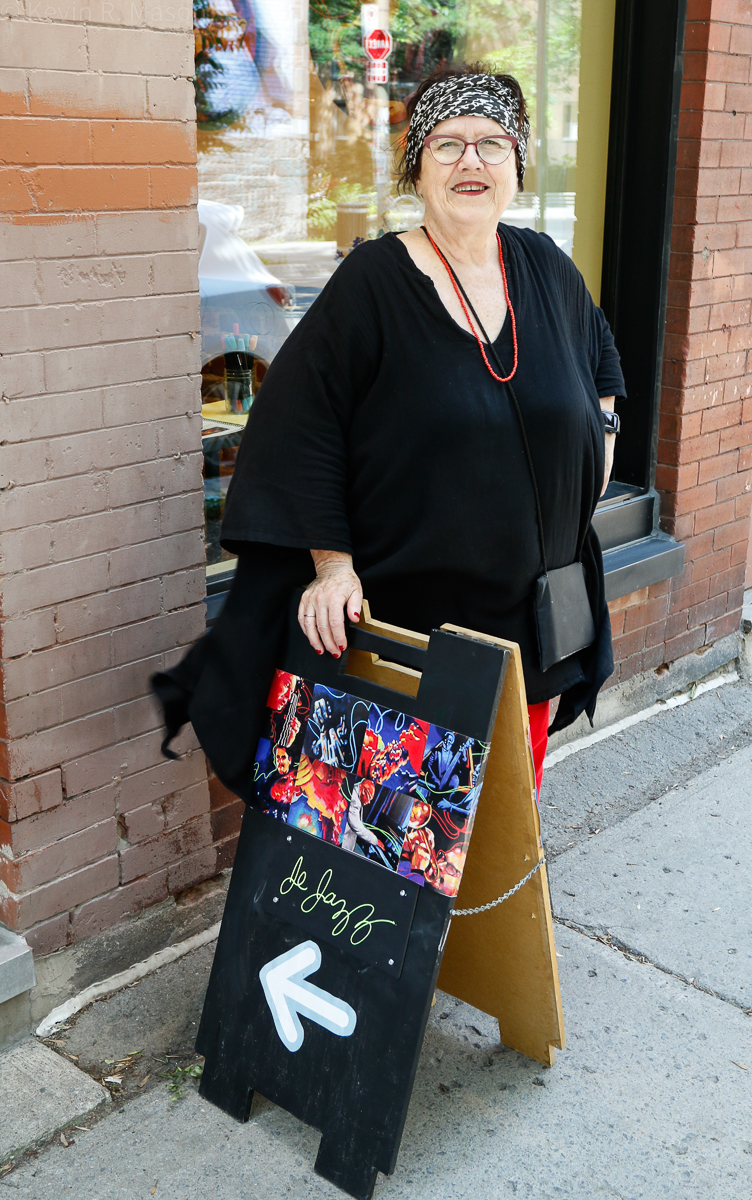
Madeleine’s latest venture is the lovely Studio M Gallery at 211 Milton Street in Montréal. She hosted her show, Je Jazz(I Jazz), from June 25 to July 5, 2025. Je Jazz was a vibrant tribute to local musicians, and her paintings captured the brilliant talent of these performers. There were also live musical performances during this exhibition period. Opening night featured a carefully curated collection of music, Playlist Studio M, Vol. 1, by composer/musician Michel Verreault. Mado continues to host art exhibitions and music events throughout the year
This year, Madeleine is launching a new exhibition during FIJM at Studio M Gallery, Le JAZZ s’affiche sur Milton, which will pay a vibrant tribute to jazz from June 25 to July 5, 2026. The artists who will participate are Marcel Cusson, Francine Robert, Michel Desrosiers, Hélène Matteau, Suzanne Perreult, and the curator, Madeleine Murphy. The opening reception will be on June 25, from 5:00 pm to 8:00 pm. On June 27, live jazz will be presented by pianist Felix Stussi and bassist Daniel Lessard from 2:00 pm to 3:00 pm. Another live performance by flautist François Richard and guitarist Samuel Bonnet will take place on July 4 from 2:00 pm to 3:00 pm. For more information, go to: www.studiomstudio.com.